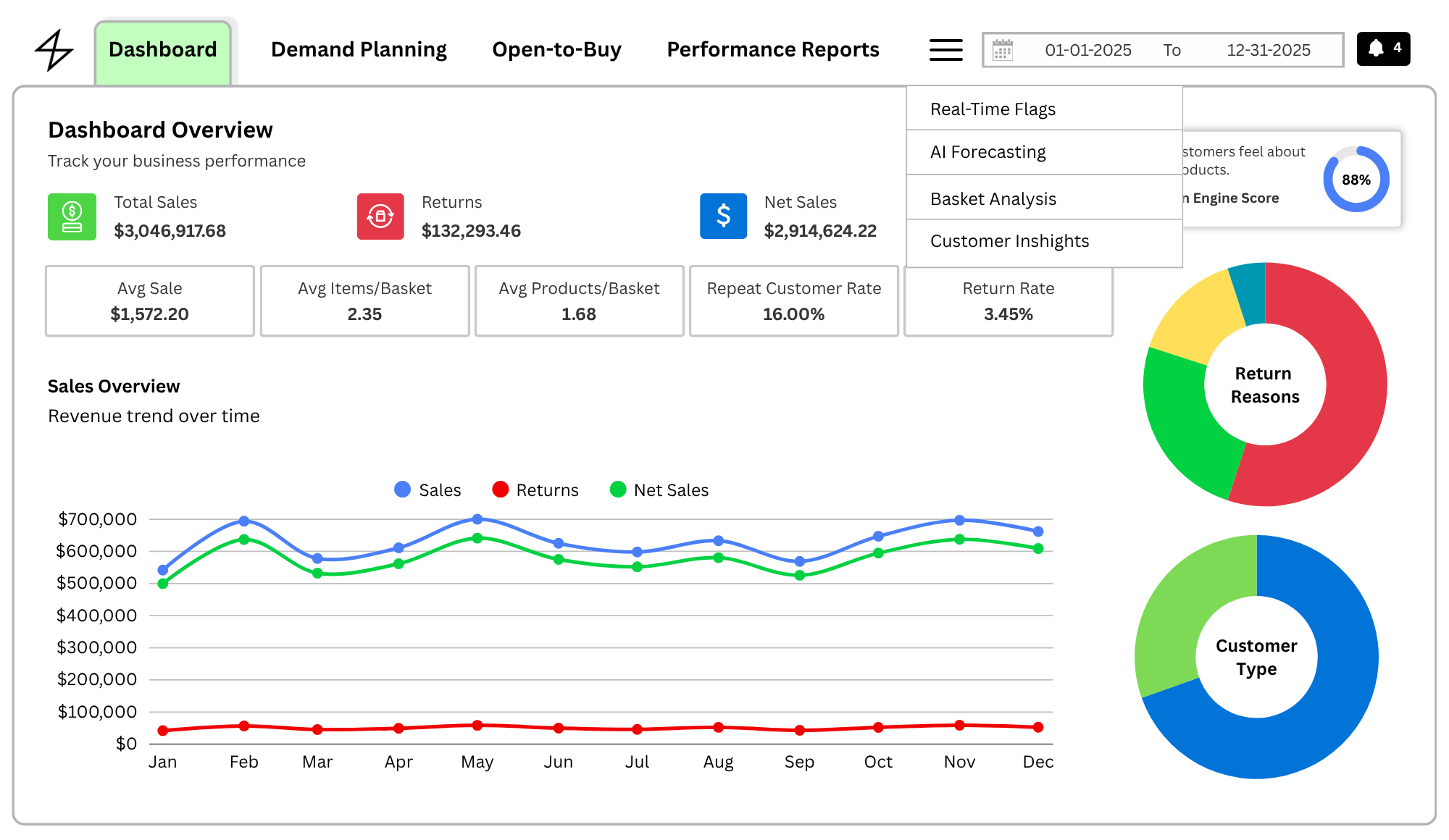
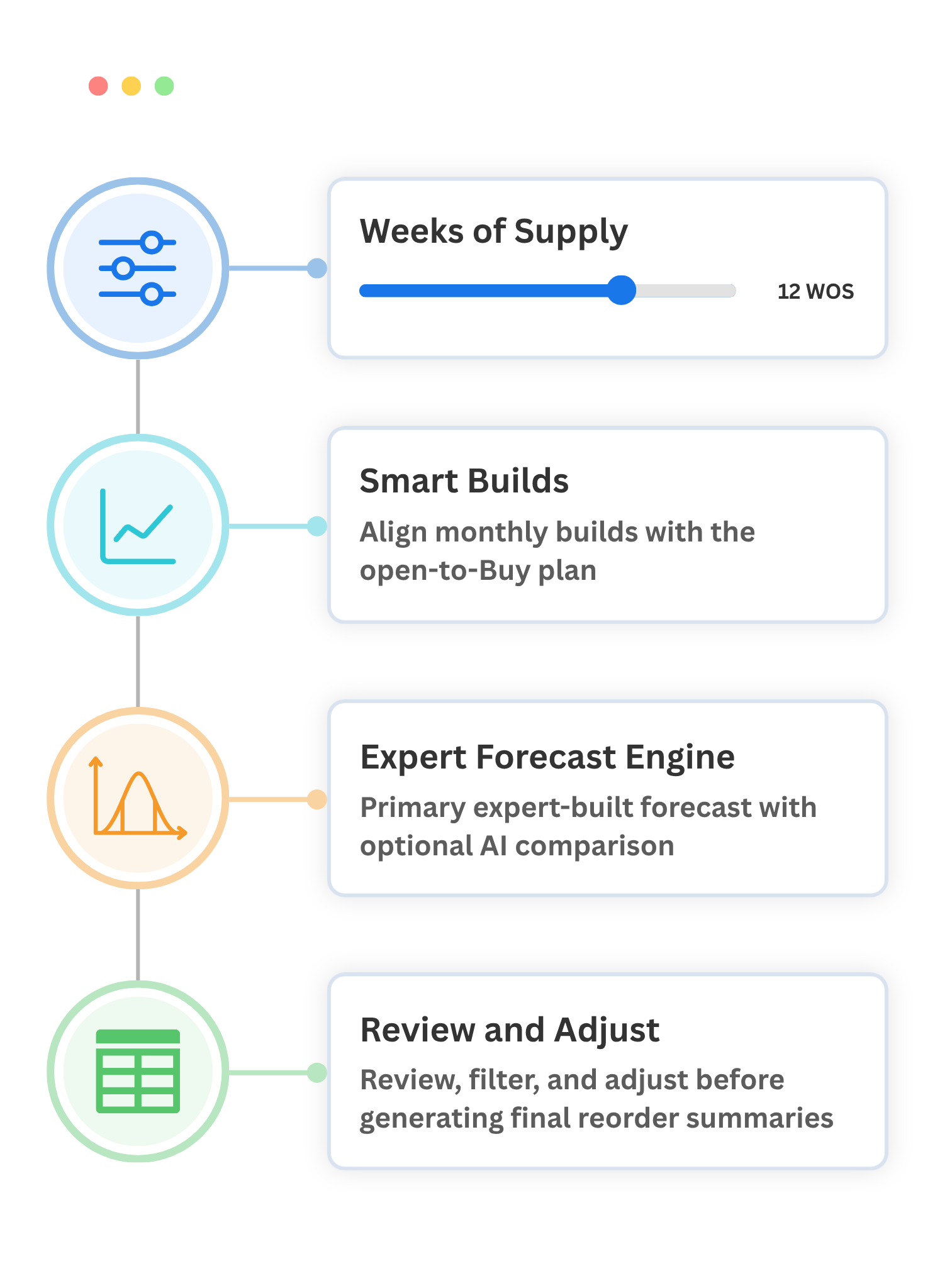
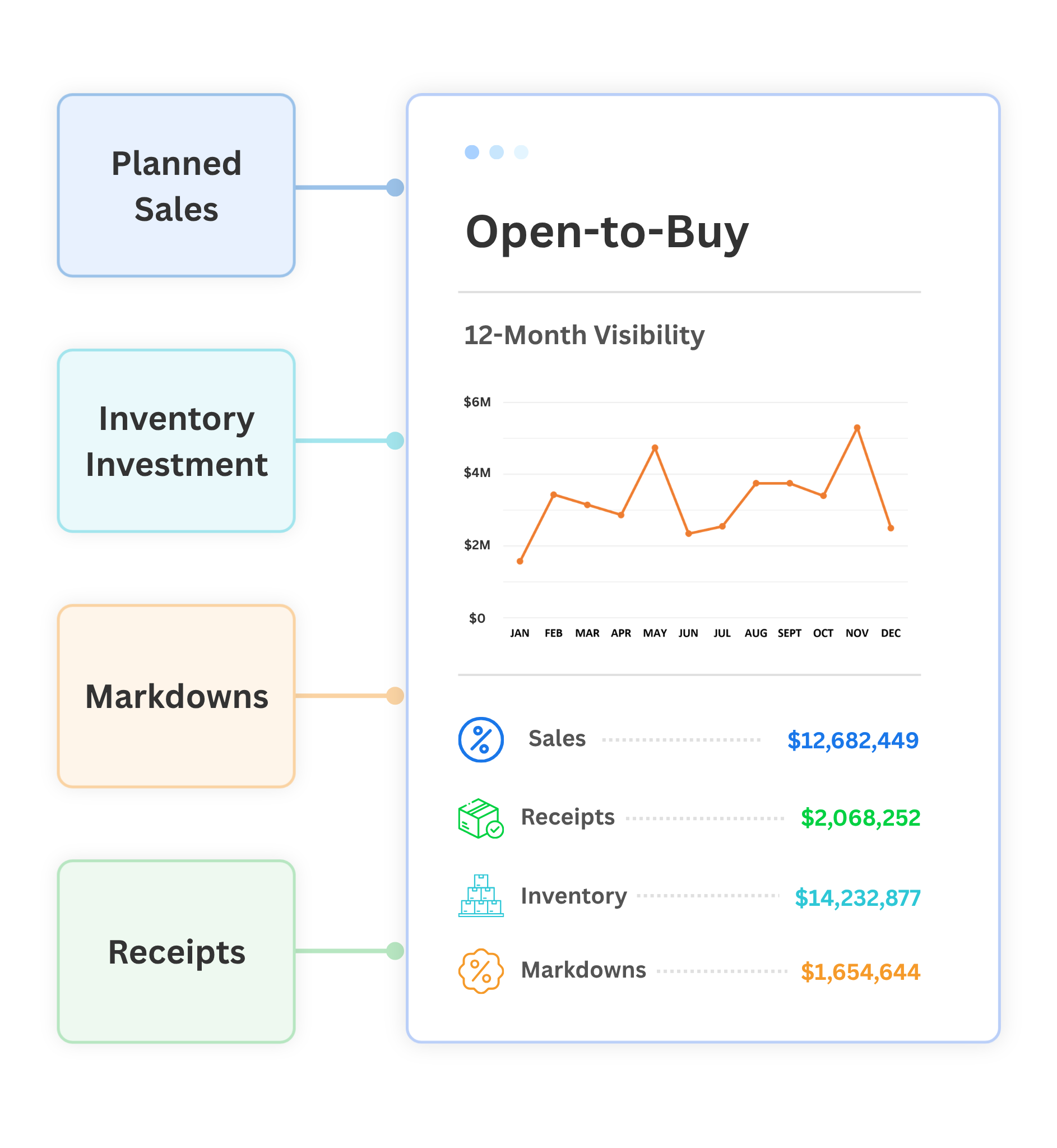
Our Open-to-Buy report gives retailers actionable insights, 12-month visibility, and margin-focused planning by connecting sales goals, inventory investment, markdowns, receipts, and weeks of supply into one clear planning view. Instead of managing disconnected spreadsheets, teams can track how buying decisions impact future inventory, budget control, and profitability, helping them plan purchases based on projected sales, manage open-to-buy more effectively, and understand when new buying decisions are needed.
Our Customer Review Analysis automatically analyzes customer feedback and turns reviews into clear sentiment scores for products, categories, and vendors. Teams can quickly see what customers love through positive keywords like comfortable, high quality, perfect fit, durable, and great value, while identifying issues through negative keywords like poor quality, damaged, wrong size, defective, bad fit, and not worth it. This helps retailers uncover recurring problems and make smarter product, buying, and vendor decisions.
Our Vendor Performance report gives retailers a clear view of supplier impact by connecting total sales, returns, net sales, return ratios, product performance, and monthly sales activity into one organized view. Instead of reviewing vendor data across separate reports, teams can quickly compare vendor profitability, identify suppliers with high return risk, understand which products are driving results, and decide which vendors need closer review, stronger negotiation, or continued investment.
Our Market Basket Analysis helps retailers understand which products are commonly purchased together by identifying strong product relationships, pairing frequency, and purchase probabilities. Teams can quickly see which items drive cross-sell opportunities, which products should be promoted together, and how customer buying patterns can support smarter merchandising, bundling, product placement, and inventory planning.